
Most of what a tree surgeon’s website claims cannot be checked by the person reading it. Insurance figures, experience, care taken on the day: all of it has to be taken on trust. One claim is different, because anybody can verify it from their phone in about a minute, and almost no website in the trade publishes it in a form that allows them to.
This is a practical account of what the law requires of a firm that carries away what it cuts, why the registration number belongs on the website rather than a logo, and what else on a tree surgery site can be made checkable. It follows the post on protected trees, which covered what you are allowed to cut. This one is about what happens to it afterwards. It is not legal advice.
Carrying the waste is a regulated activity
Under section 1 of the Control of Pollution (Amendment) Act 1989, the position is blunt:
“It shall be an offence for any person who is not a registered carrier of controlled waste, in the course of any business of his or otherwise with a view to profit, to transport any controlled waste to or from any place in Great Britain.”
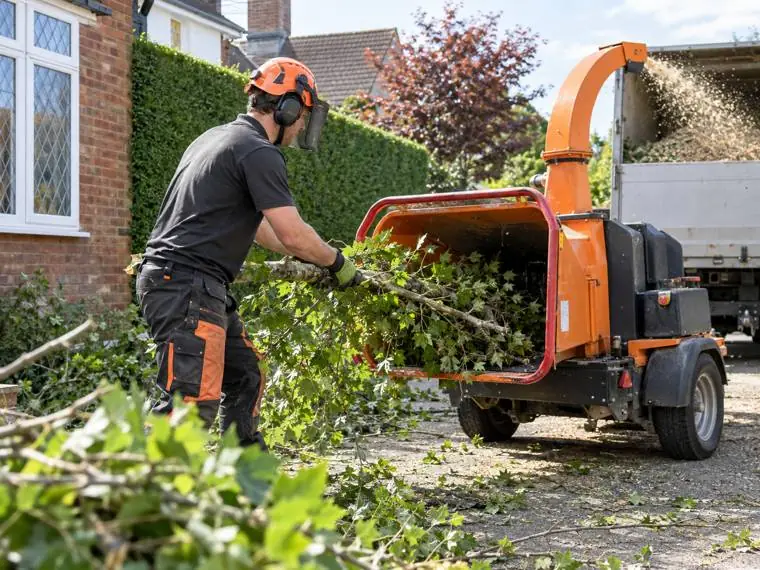
Arisings from a job are controlled waste, and a tipper leaving a customer’s drive is transporting it in the course of business. Registration is not a quality mark that a firm opts into. It is the condition of doing that part of the work lawfully.
And so is handing it on
The second duty is the one that catches firms who tip at a yard, a biomass site or a friend’s field. Section 34 of the Environmental Protection Act 1990 requires anyone who carries or keeps controlled waste to take reasonable measures, on transfer, to secure:
“that the transfer is only to an authorised person or to a person for authorised transport purposes; and… that there is transferred such a written description of the waste as will enable other persons to avoid a contravention…”
In Scotland, the list of authorised persons at section 34(3) includes a person holding a permit or registration under the Environmental Authorisations (Scotland) Regulations 2018 authorising the transport of another person’s waste. The practical reading is the same either side of the border: the chain has to end somewhere lawful, and there has to be a written record of what moved.
Why this is a website question
Registration produces something most trust signals never do: a number on a public register that a stranger can look up.
- In Scotland, SEPA covers the registration needed for transporting waste, including a search for an authorisation document that you or someone else holds.
- In England and Wales, the Environment Agency publishes a public register of waste carriers, brokers and dealers that anyone can search by name or registration number.
So a line reading “Registered waste carrier, SEPA registration WCR/R/1234567” is a different kind of claim from a grey badge in a footer. The badge asks for trust. The number invites a check, and that is exactly why it is persuasive in a trade where the rogues got there first.
It also answers a question homeowners increasingly ask out loud, because they have read the local news story about a cleared garden turning up in a lay-by.
What else on a tree surgery site can be made checkable
The same test (could a stranger verify this?) applies to the rest of the trust content on our tree surgeons page:
- Insurance with the figure and the insurer. “Fully insured” means nothing. Public liability at a stated amount, with cover that mentions working at height, is a claim a customer can put to you.
- Tickets with names against them. Chainsaw maintenance, felling, aerial cutting and aerial rescue, set out per climber rather than as an unexplained logo strip.
- Where the timber goes. Chipped and away, left as mulch, cut to stove length and stacked. It changes the price, it changes the day, and saying it closes the loop that the registration number opens.
- The written record. If you provide a transfer note for the waste, say so. Most firms do it and never mention it.
- Photographs of your own work, rather than stock images of somebody else’s rigging.
None of that is marketing flourish. It is the same information a commercial client’s procurement form asks for, published once, where a domestic customer can also read it.
What we would not put on a tree surgery site
- “Licensed waste carrier” with no number. If the registration is real, publishing the number costs nothing and proves it.
- A registration number we have not been given in writing. Numbers, insurers and certificate details come from the firm and go up exactly as supplied.
- Badges for schemes the firm does not hold, or logos implying membership that lapsed two years ago.
- “All waste responsibly disposed of” as the only statement about where several tonnes of timber went.
- Claims about a customer’s own duties that we are not qualified to make. What the householder is responsible for is a question for the regulator, not for a web page.
Sources and method
- Control of Pollution (Amendment) Act 1989, section 1: the offence of transporting controlled waste without registration.
- Environmental Protection Act 1990, section 34: the duty of care, the transfer to an authorised person, the written description, and the list of authorised persons applying in Scotland.
- SEPA, transporting waste: registration for carrying waste in Scotland, and searching for an authorisation document.
- Environment Agency public register: waste carriers, brokers and dealers in England and Wales.
What this post does not do. Central Systems builds websites. We are not environmental consultants or lawyers, and this is not legal advice. It does not tell any firm which tier of registration it needs, whether a particular load is controlled waste, what its duty of care procedures should be, or what a householder’s own responsibilities are. It does not cover permits for treating or storing waste, movements of plant material subject to biosecurity controls, or the separate rules for hazardous waste. Legislation and regulator guidance change: the linked sources are authoritative and this page is not.
Questions tree surgeons ask us
We only ever chip on site. Do we still need to register?
If nothing leaves in a vehicle, the transport offence is not engaged. The moment arisings are taken away in the course of business, section 1 applies. Which tier of registration fits your operation is a question for the regulator.
Is publishing the number a security risk?
It is already on a public register that anyone can search, so publishing it reveals nothing new. What it does is save the customer the trouble, which is the point.
Our registration is in the company name, not our trading name.
Then say both on the site, because a customer searching the register for your trading name needs to find the entry. A mismatch looks worse than it is.
Does any of this help with search?
Indirectly. Pages that answer real questions in plain words are what gets quoted by search engines and assistants. The stronger effect is on the person already reading, who was looking for a reason to believe you.
Commercial clients ask for all this anyway. Why put it on the website?
Because you are answering it repeatedly by email. Published once, it serves the tender, the estate agent and the householder equally, and it arrives before the question.
What if we use a subcontractor to take waste away?
The duty of care still runs through the transfer, and the person receiving it has to be authorised. How your firm evidences that is a process question worth settling before it is tested.
Could a customer verify a single claim on your website?
Send us your site. We will tell you which claims a stranger could check, which ones rest on trust alone, and which of them are worth making checkable.
Websites for tree surgeons · Free website audit · Talk to us