New: Try our free Website Audit tool. Run your free audit →Run it free →

Joiners & fitted furniture makers

The gallery makes them want it. The website has to make them ask.

Central Systems builds premium websites for joiners, fitted-furniture makers and staircase specialists. Your photographs already do the hard part. We build what comes after them — an honest price band, a spec the customer puts together themselves, and a measure booked before anyone loses an evening quoting. New builds, and rebuilds of sites where the gallery is the only part that works.

Fitted furnitureHonest price bandsMeasure bookingLocal search
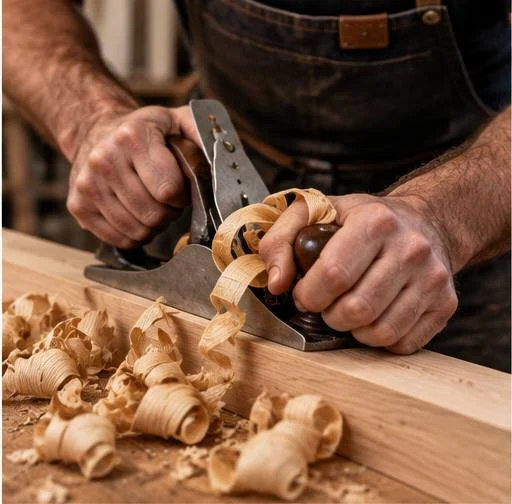
A pair of hands running a hand plane along a length of oak on a workshop bench, with a curl of shaving lifting off the blade and more gathered around it.

What we would build instead

Bespoke work has no price list. That is not a reason to publish nothing.

Ask a joiner what a run of wardrobes costs and the honest answer is that it depends on the wall — which is true, and completely useless to somebody deciding whether to make contact. A band with its conditions attached is just as honest and does the opposite job.

What we make — desktop
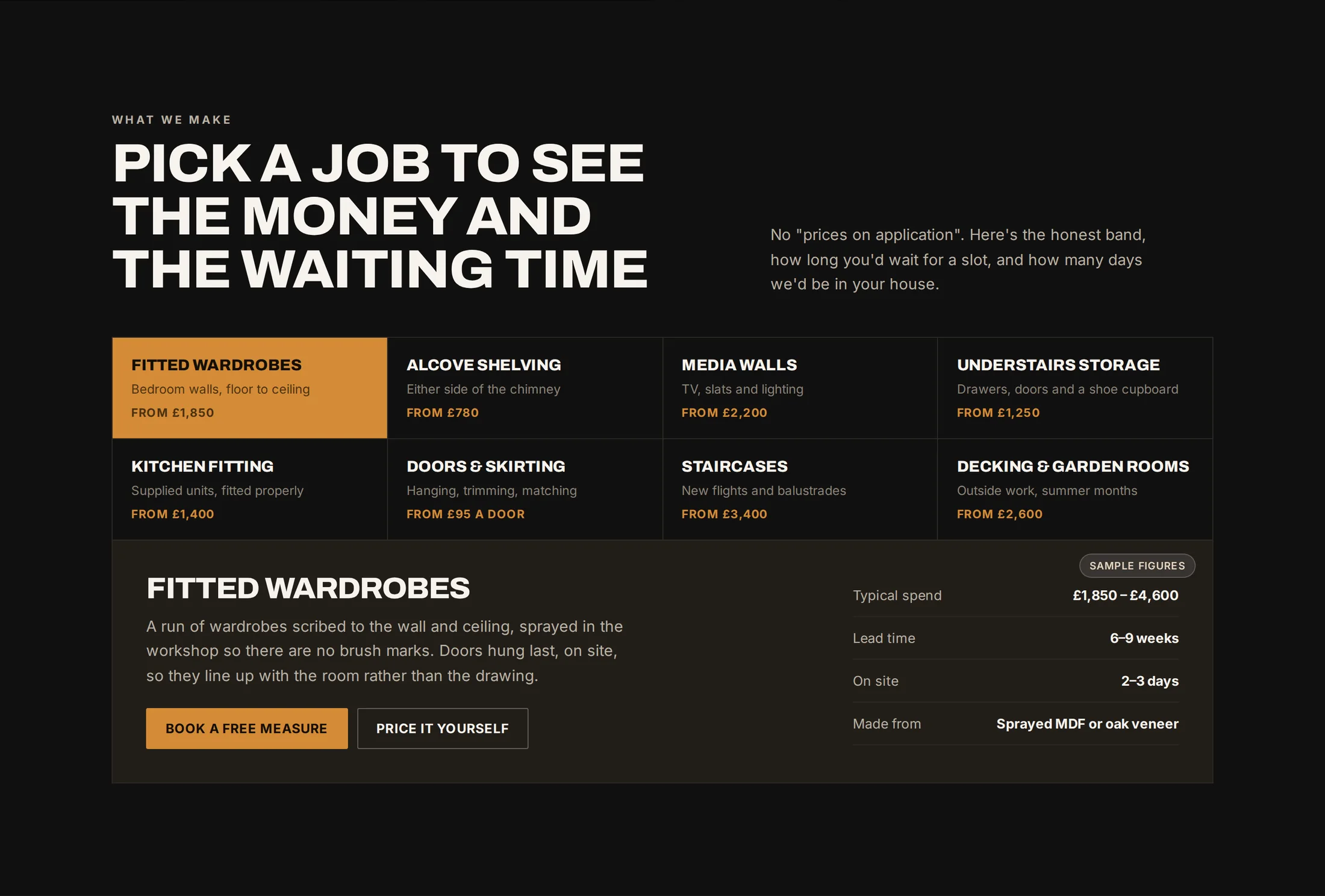
A pricing section of a joinery website designed by Central Systems, headed pick a job to see the money and the waiting time. Eight job types run across a grid, each with a from-price; the selected one opens a panel labelled sample figures showing a typical spend range, the lead time before a slot, the days on site, and what it would be made from.

Four numbers, and the last two matter as much as the first two. A band tells them whether to keep reading. The wait for a slot tells them whether you are any use for a room they need finished before Christmas. The days on site tell them what it costs in disruption, which is the figure nobody publishes and everybody worries about.

  • Bands are yours, and they stay yours. We build the figures so your team can change them in a couple of minutes. A price list that needs a developer goes stale, and a stale price is worse than none.
  • Say what moves the number. Floor-to-ceiling against a gap on top. Painted against veneer. Scribing to a wall that is nowhere near straight. Naming the variables is what stops a band reading as a quote.
  • Never publish a figure you would not honour. If a from-price only applies to a straight wall in a modern house, the page says so at the point the number appears, not in a footnote nobody opens.

Before anybody gets in the van

Let them build it against their own wall first.

Wall width, ceiling height, door style, what goes inside, and whether it runs to the ceiling. Five questions a customer can answer standing in the room with a tape measure, and at the end of them a drawing of their own wardrobe and a band that moves with what they picked.

Designer — desktop
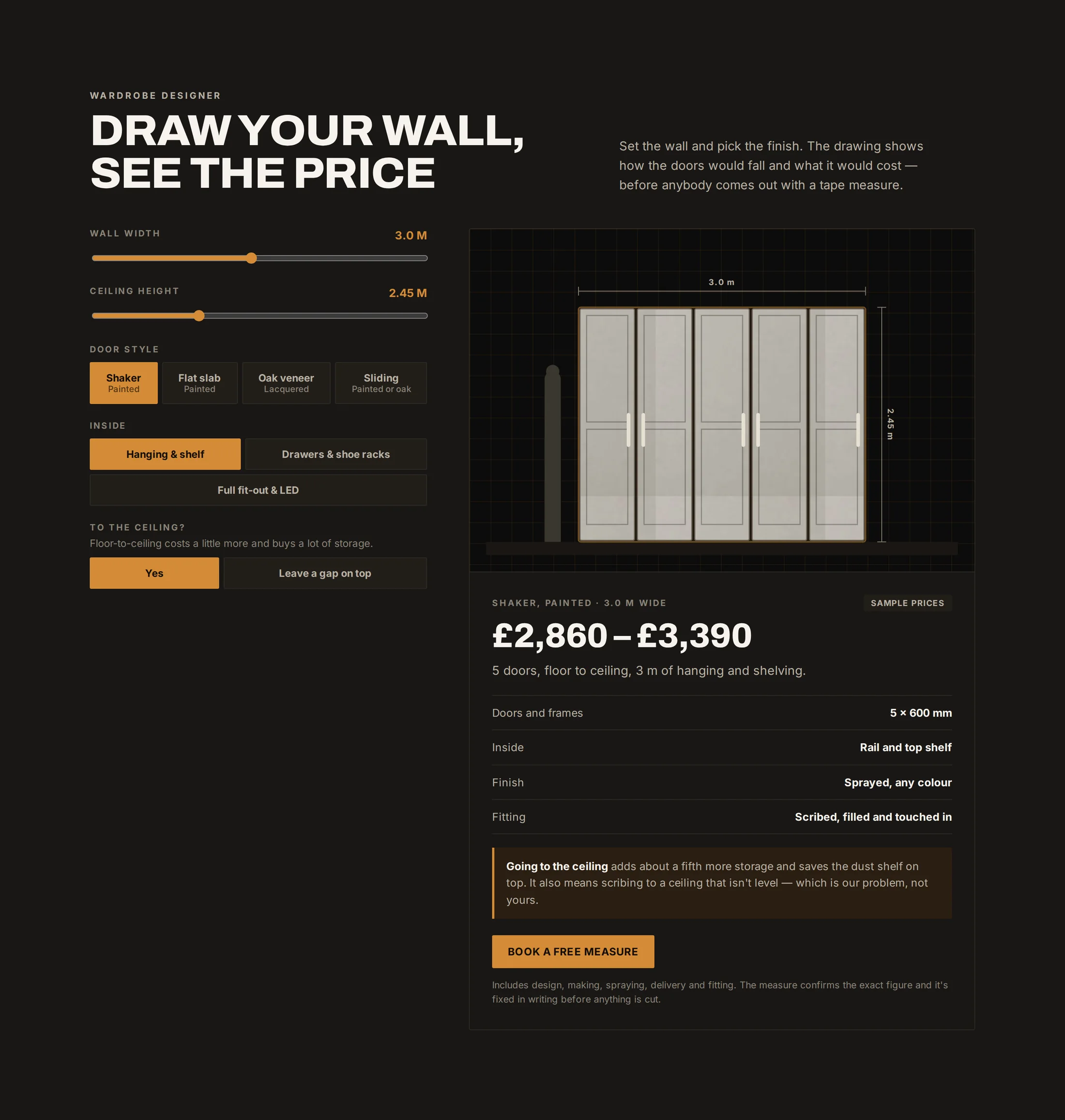
A wardrobe designer on a joinery website designed by Central Systems, headed draw your wall, see the price. Sliders set the wall width and ceiling height, buttons choose the door style and the interior, and a drawn elevation shows five doors with the dimensions marked. Beneath it a panel labelled sample prices gives a range, the door count, the finish and how the fitting is done.

The drawing is the part that does the work. Most people cannot picture five doors across three metres, and a number on its own gives them nothing to check it against. Seeing the doors fall where they would actually fall is what turns a vague idea into something specific enough to ask about.

It is a guide, and the page says so where the figure appears. The measure is still what fixes the price, and a tool that pretends otherwise creates an argument on somebody’s landing in six weeks’ time.

The finished site

Work, money and a way in, on one page.

The photographs stay where they have always been, because they are still the reason anybody is reading. What changes is everything underneath them: what it costs, how long the wait is, and a way to ask that takes under a minute on a phone.

Homepage — desktop
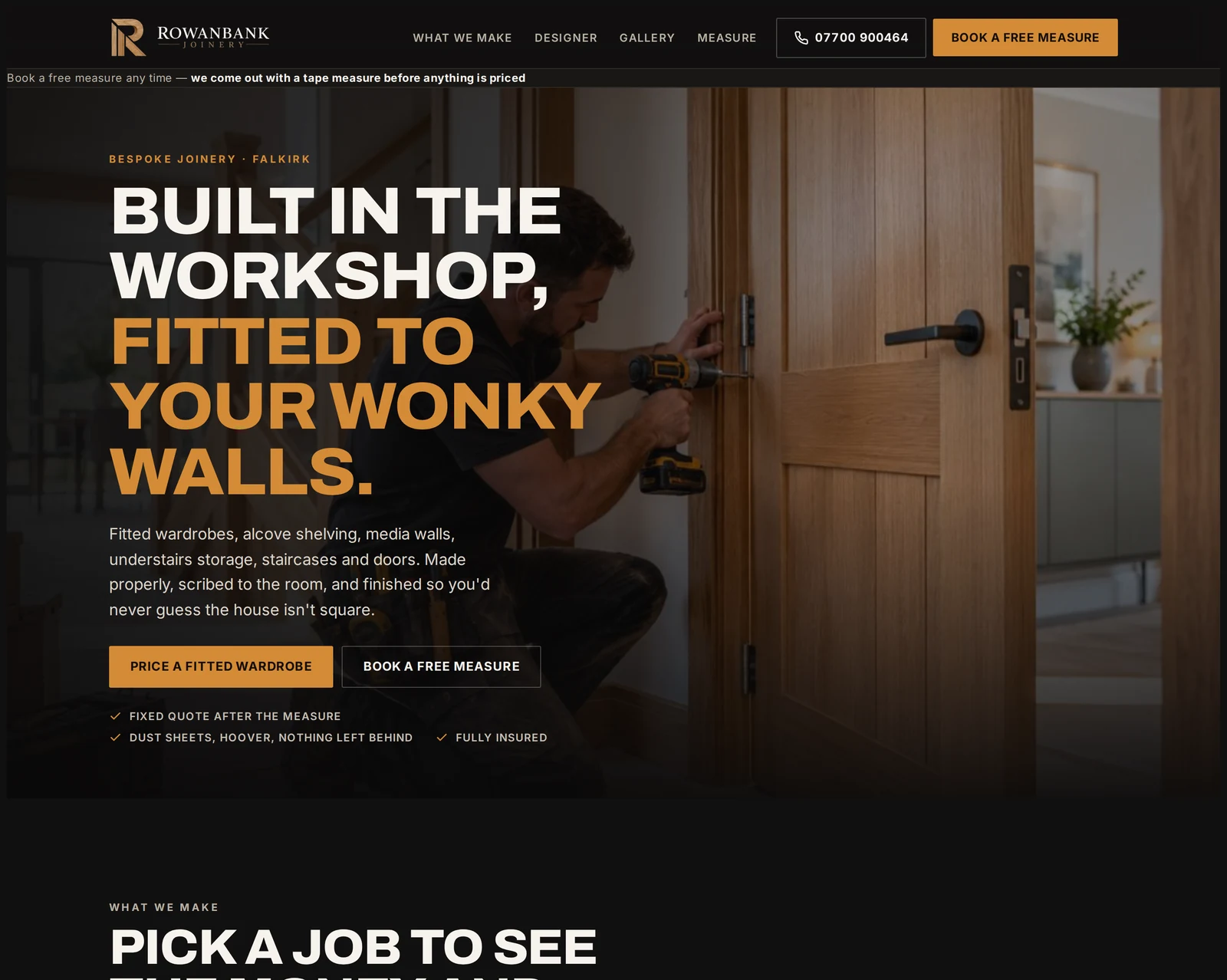
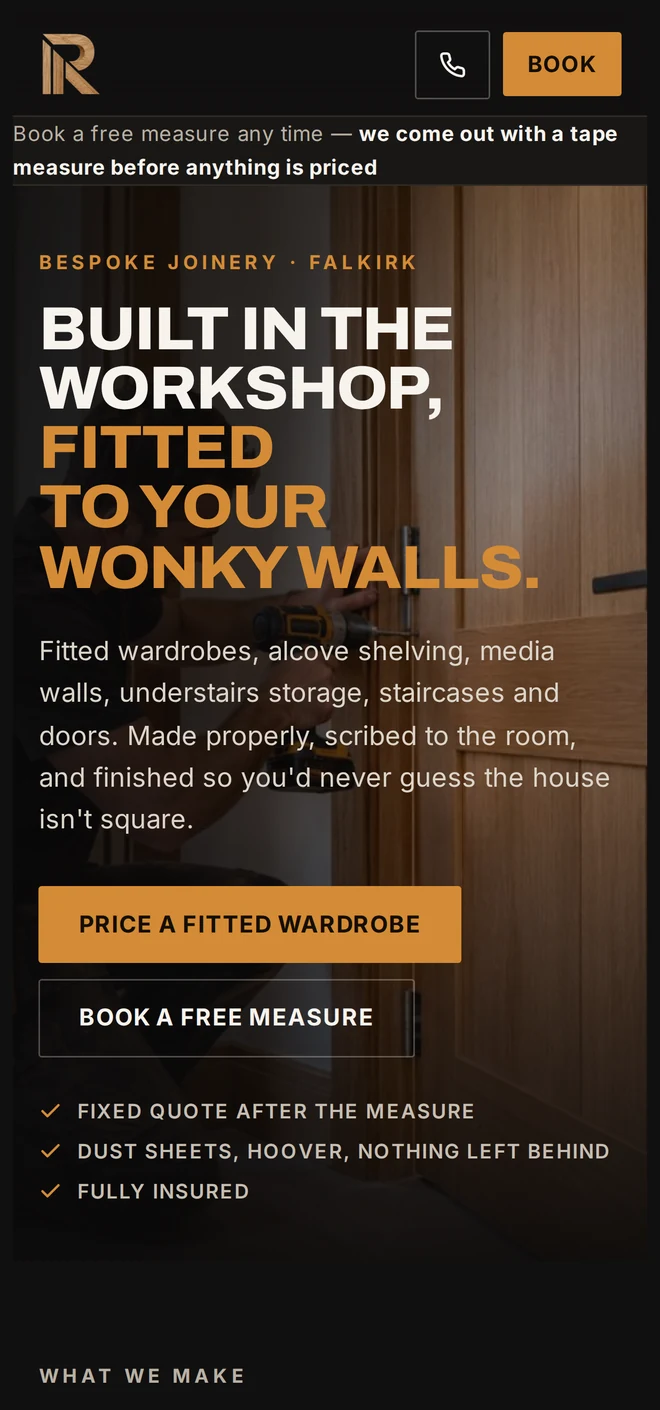
The homepage of a joinery website designed by Central Systems. A dark header carries the firm name, four navigation links, a phone number and a book-a-measure button, above a strip offering a free measure. The hero reads built in the workshop, fitted to your wonky walls, over a photograph of a joiner hanging an oak door, with a fitted-wardrobe price button beneath it.
The same homepage on a phone. The header collapses to the firm name, a call button and a measure button, and the headline, the two buttons and the reassurance list stack into one readable column.

Rowanbank Joinery is a firm we made up and then built for. It exists so the bands, the designer and the measure booking can be shown running on one site instead of described one at a time. Where a real joiner would have customer reviews, this one shows none, because inventing them to decorate a demonstration would undo the argument two sections above.

The actual conversion

The thing to book is the measure, not a phone call.

“Get in touch” asks somebody to start a conversation with no idea where it goes. A free measure is a specific, finite, obviously useful thing: half an hour, a tape measure, and a fixed price at the end of it. It is far easier to say yes to, and it is the step that actually decides the job.

Book a measure — desktop
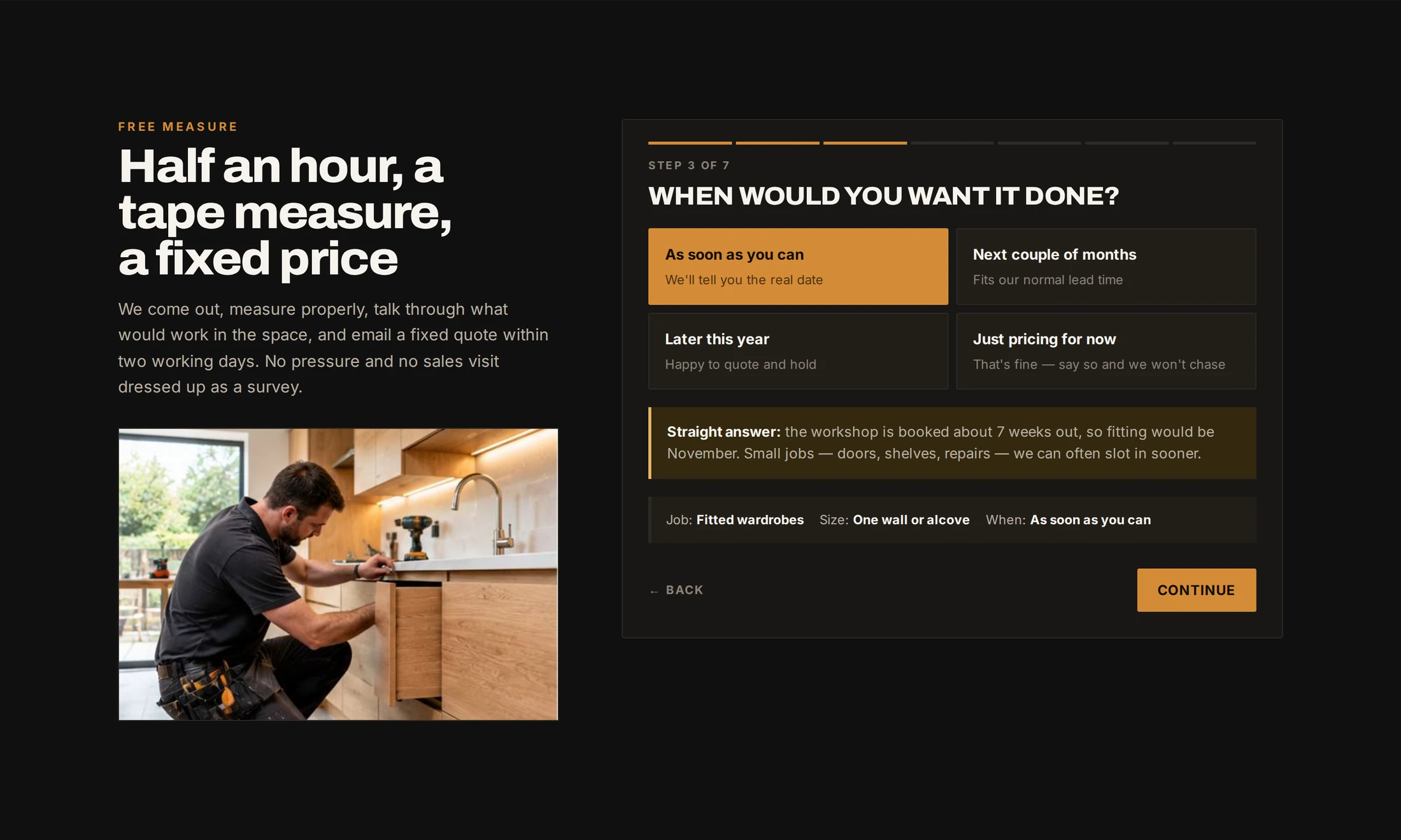
A booking section of a joinery website designed by Central Systems, headed half an hour, a tape measure, a fixed price. A short sequence of questions asks what the job is and which room it is in, with a progress indicator showing the step, beside a photograph of a joiner fitting kitchen units.

Ask the questions in the order a joiner would ask them. What the job is, which room, roughly how big, and when they would want it done — before the phone number. By the time the enquiry reaches you it is already a job you can price, and the ones that were never going to happen have usually stopped at question two.

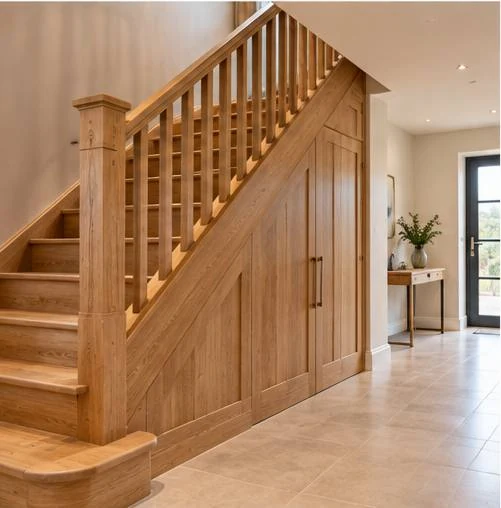
A finished oak staircase with turned newel posts and slatted panelling beneath it, running up from a pale tiled hallway.

The part that costs you evenings

Quoting is unpaid work, and most of it is spent on jobs that were never real.

The measure is the expensive bit of winning a job: an hour in the van, half an hour in the house, and an evening drawing and pricing it. Done for somebody who wanted a number for the insurance, or who was always going to buy a flat-pack, that hour comes straight out of your week.

So the site does the first pass. It asks what the job is, roughly what size, when they want it and whether they have seen the bands — and it says plainly what you do not do, which turns away more wasted measures than any qualifying question.

Where a joiner already runs a diary or a quoting system that works, we build around it rather than over it. The website’s job is to stop bad enquiries arriving, not to replace the tools you already trust.

Being found at all

Nobody searches for a joiner. They search for the thing they want built.

“Fitted wardrobes” and a town. “Understairs storage” and a town. “Oak staircase” and a town. A single page called Services that lists nine things competes for none of them, because it is not really about any of them.

Structure

A page per thing you make

Wardrobes, alcoves, media walls, understairs, staircases, doors. Each with its own photographs, its own band and its own questions, so each one can rank for what it actually is.

Geography

The towns you genuinely cover

Named honestly, including the edges where travel starts to be a factor. A page claiming a city you will not drive to wins enquiries you then have to turn down.

Answers

The questions you get asked in the van

How long it takes, whether they need to empty the room, MDF against oak, what happens to the old units. Written once, properly, they earn search traffic for years.

Clear structure and genuinely useful writing are what let search — and the AI tools people increasingly ask first — work out what you make and which towns you make it in. That is the mechanism, and the mechanism is the only part anyone can honestly promise. Nobody controls where you come.

The reasonable objections

What joiners usually say when we suggest this.

“Publishing prices lets every competitor see them.”

They can already ring you as a customer and ask. What a band actually costs you is the enquiry from somebody who assumed you were out of reach, and you never hear about those, which is what makes the risk feel one-sided.

“Every job is different. A range would be meaningless.”

Ranges are how people buy cars, kitchens and extensions, all of which vary more than a wardrobe. The range is not there to be accurate. It is there to tell somebody whether they are in the right shop.

“My work speaks for itself.”

It does, to anybody standing in front of it. On a phone at nine o’clock your work is a photograph the same size as everybody else’s, and the only thing that distinguishes it is what the site says around it.

“I get enough work from word of mouth.”

Most good joiners do, and it is the best kind. A recommendation still sends people to your site to check you are real before they call, and that visit is the one thing in the chain you control.

“I already have a website.”

Then it probably has the gallery right and the rest missing, which is the usual shape. A rebuild keeps the photographs and the address history and changes what happens after somebody has finished looking.

“I am not interested in a load of software.”

Nor should you be. This is a website. The only moving parts are a price band your team can edit and a form that asks sensible questions, and if the diary you use now works, it stays.

Let’s build the part that comes after the photographs.

Tell us what you make, where you work and what you are tired of quoting for, and we will show you what the site would look like with the money and the measure built into it.