Dentists & dental practices
Central Systems builds premium websites for NHS and private dental practices. Sites that answer the three things a patient will never ring up and ask — how bad is this, what will it cost me, and will it hurt — so the appointment gets made instead of postponed again. New builds, and rebuilds of sites that look perfectly nice and book almost nobody.
What the enquiry form never hears
Every practice knows them, because every nervous patient eventually admits them from the chair. Almost no dental website answers any of them above the fold, which is why so much traffic reads the page and rings nobody.
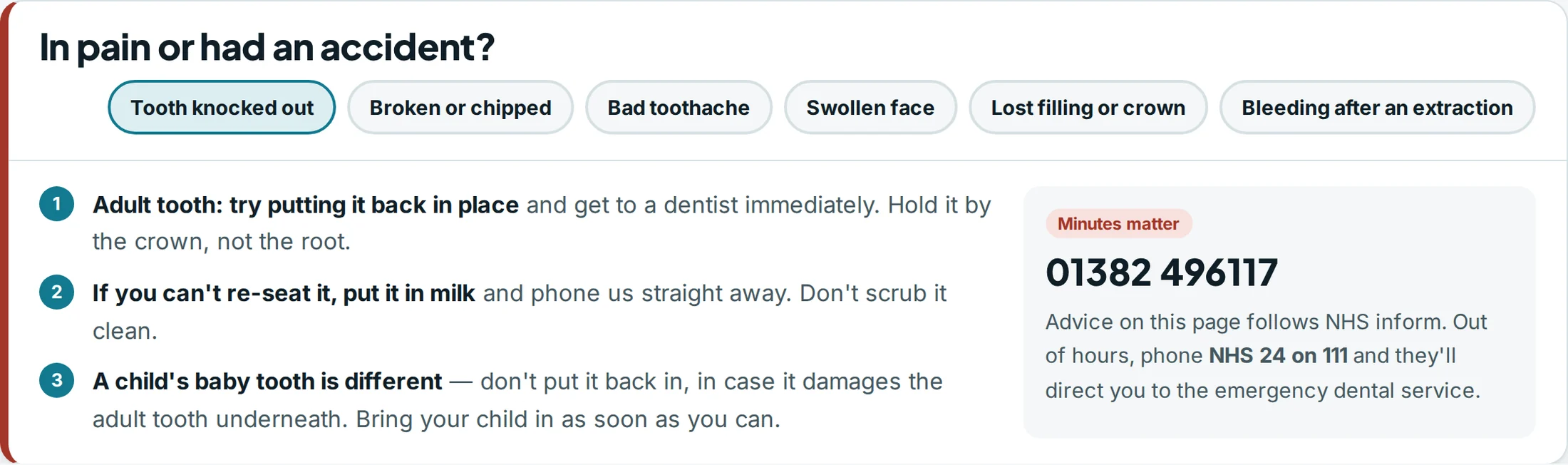
Something has broken, or throbbed for two nights. They are weighing a real symptom against the fear of wasting your time, and they will search before they dial.
What the site owes them: a plain answer about what the symptom usually means and how quickly it needs looking at — including the times the honest answer is “this can wait”.
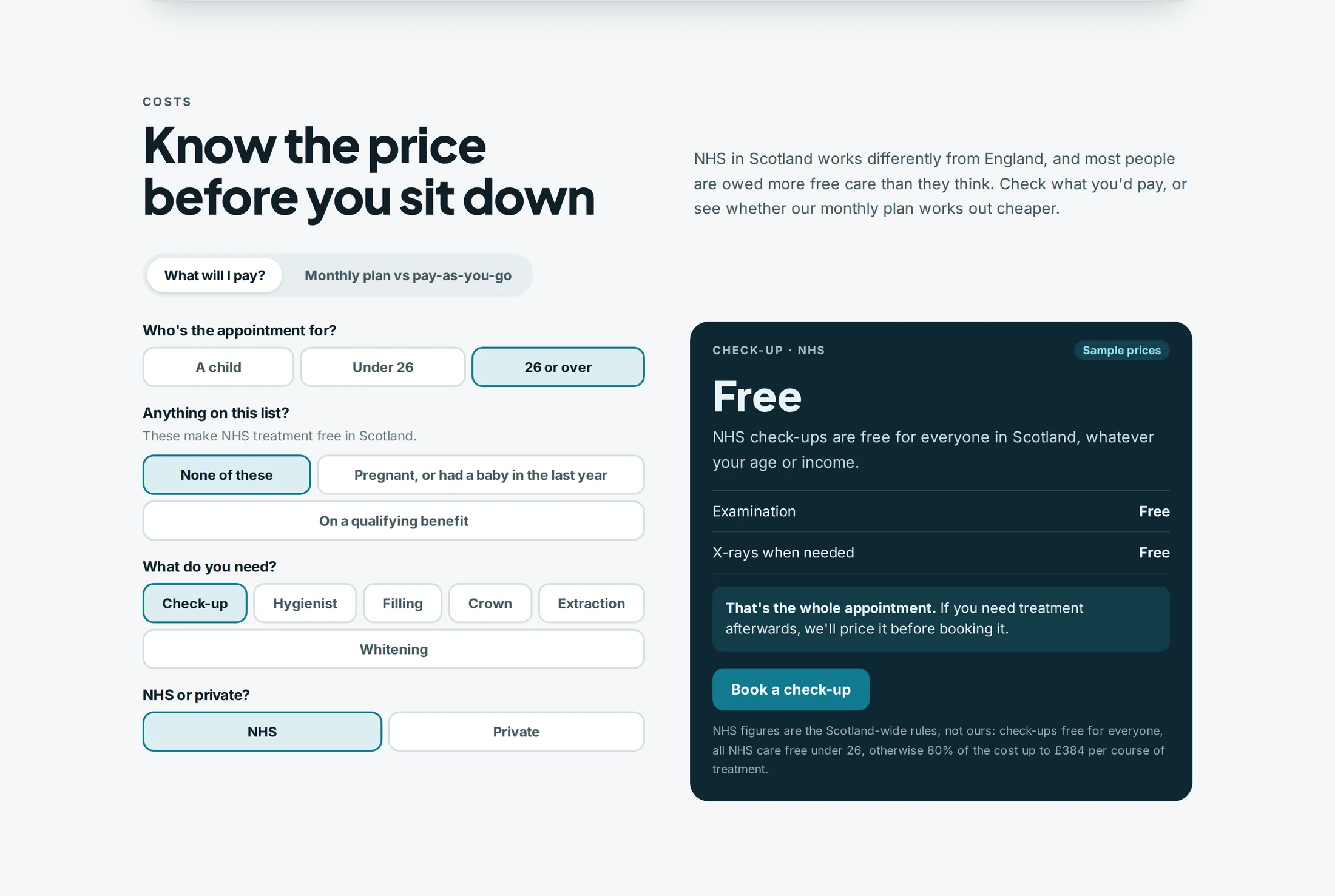
NHS and private sit side by side in the same building on different rules, and most people have no idea which they are entitled to. Silence on price does not read as discretion. It reads as bad news.
What the site owes them: the national entitlements stated as national entitlements, the practice’s own fees stated as the practice’s, and a clear line between the two.
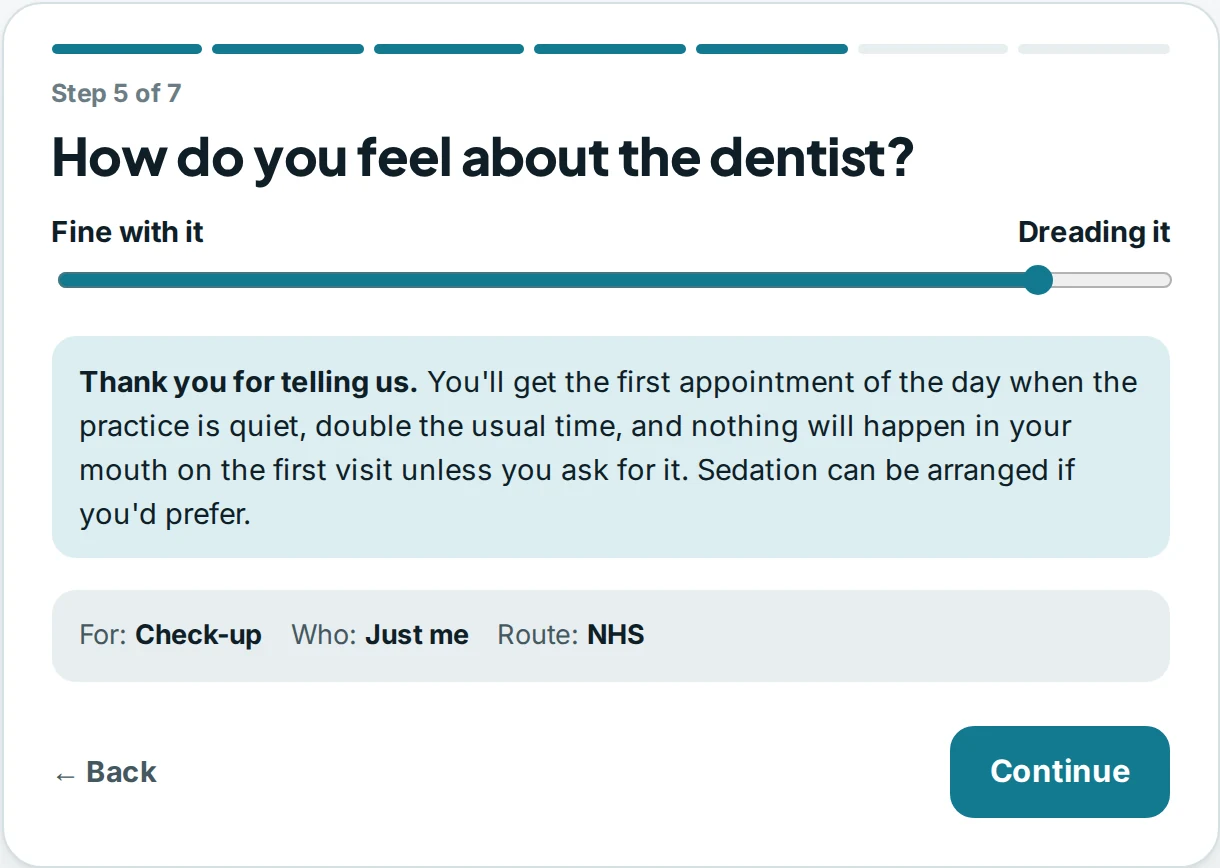
The patient who has avoided a dentist for nine years is not comparing practices on price. They are looking for permission to walk in, and one wrong sentence sends them away for another year.
What the site owes them: somewhere to say they are frightened before they arrive, and evidence that saying so changes the appointment they get.
The first question
Dental pain does not keep office hours. Somebody who has chipped a tooth at the weekend is going to read something before Monday, and if it is not your page it will be a forum. Answering properly is also the fastest filter you have: it tells the genuine emergency to ring now, and tells the chipped-and-comfortable to book normally.
Your words, checked with you. We draft the triage copy against NHS inform and then sit with the clinical lead until every line is one the practice is happy to stand behind. It is written so it never implies a symptom is safe.
The second question
In Scotland an examination is free for everyone and under-26s pay nothing for NHS care at all — and a surprising number of people who qualify have no idea. A page that explains the national rules before it quotes a private fee earns the right to quote the private fee.
National rules and practice fees, kept visibly apart. The entitlements are quoted as national rules and labelled as such in the design; every private figure is the practice’s own and is labelled as a sample where one is shown. Fee tables are built to be updated by your team in minutes, because a stale price list is worse than none.
The third question
Dental anxiety is the single biggest reason a person who needs treatment does not have it. A booking form that asks the question is easy. A practice that changes the appointment because of the answer is the thing worth building, and the thing worth saying on the page.
The promise has to be real before it goes on the page. Longer slot, quiet time of day, a signal that stops everything — whatever your team genuinely does. We will not write a reassurance your diary cannot keep.
The finished site
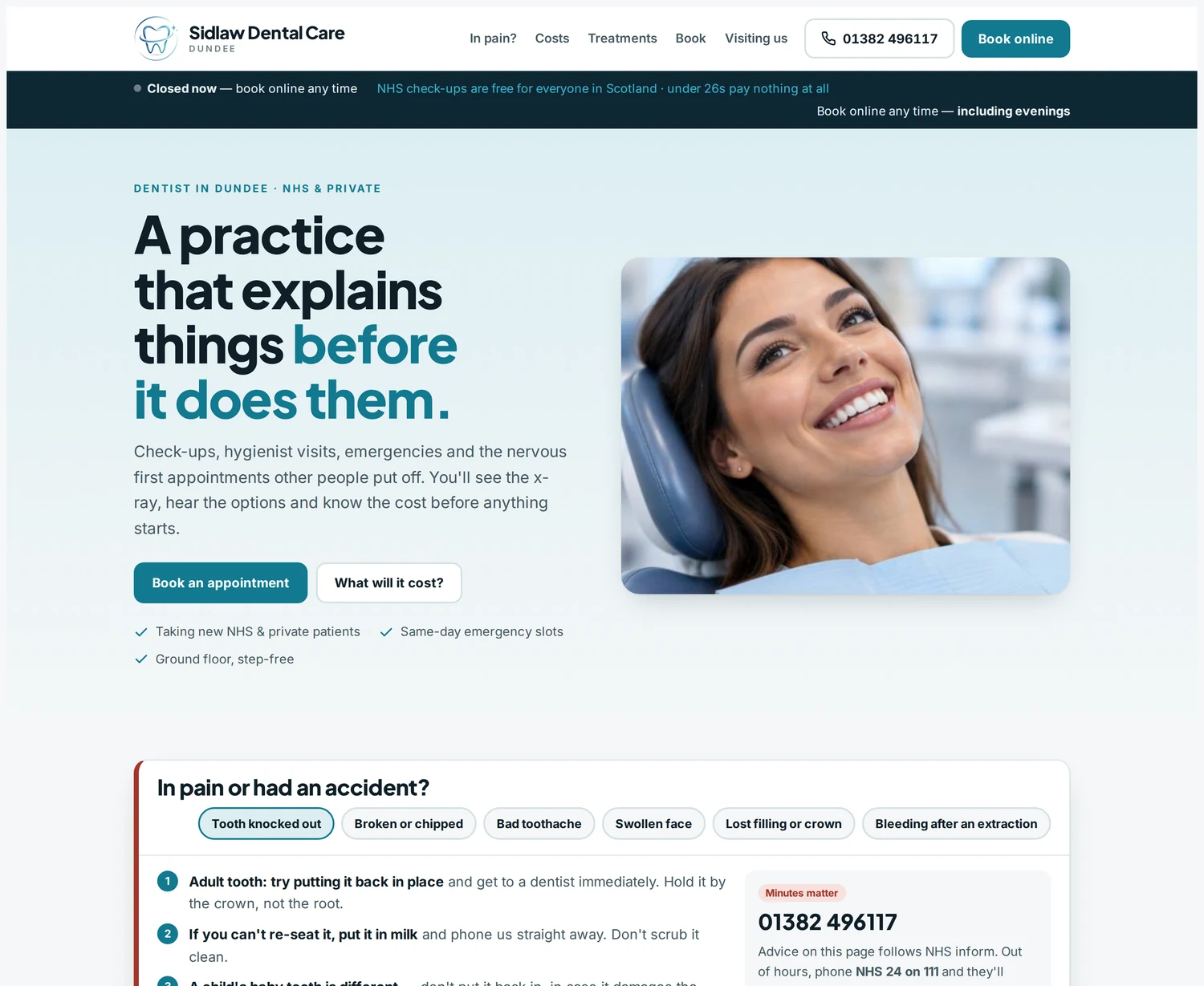
Help first, because the person in pain cannot wait for your practice history. Money second. A way in third, built so that admitting you are frightened is the easiest thing on the form. Nothing buried under a menu called Patient Information.
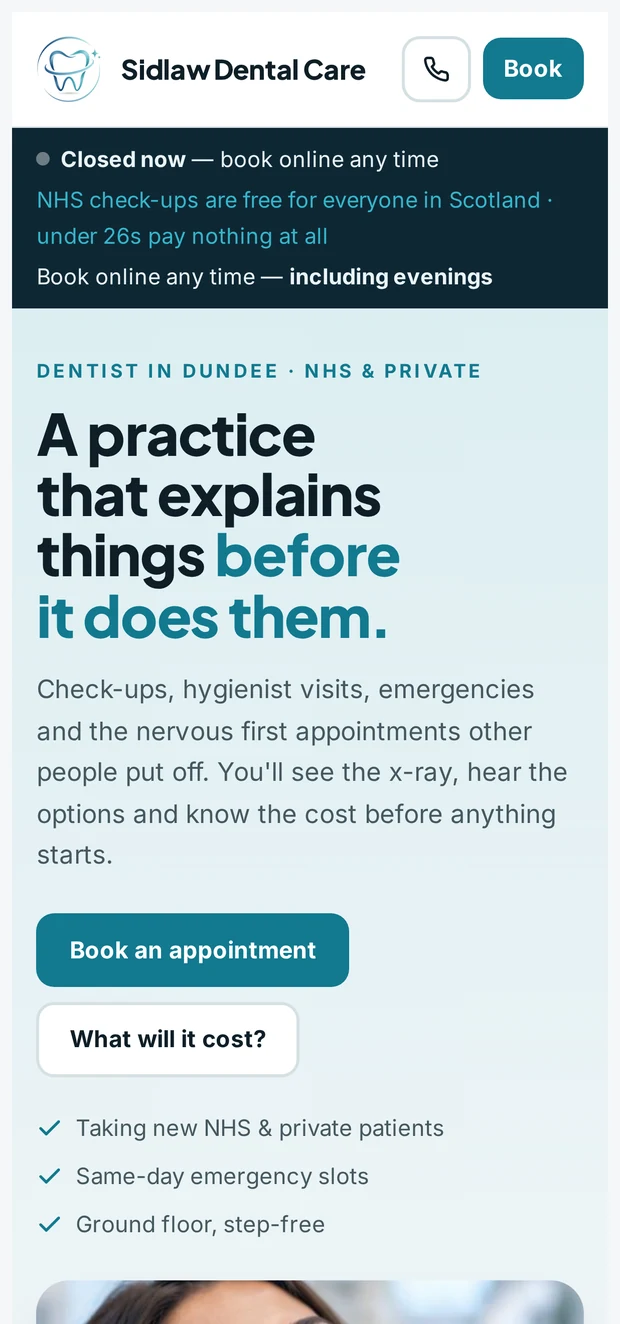
Sidlaw Dental Care is our own practice, not a client’s. We designed and built it here so the three routes could be shown working together on one page rather than described. Where a real practice would show its patient reviews, this design shows none at all. Writing fake ones to decorate a demonstration would contradict the section directly above it.
Regulated words
Your website is advertising, and dental advertising answers to the General Dental Council and to the advertising codes. Most of the phrases a marketing agency reaches for first are exactly the ones that cause a practice a problem later.
None of this costs you enquiries. The practices that write carefully read as the ones who will also explain things properly in the chair.
Being found
One is proximity and opening hours and a map pin, decided in seconds. The other is a considered purchase worth several thousand pounds that somebody researches for weeks, comparing three practices and reading every page you have. Most dental sites are built for the first and hope it covers the second.
New to the area, needs a dentist, wants to know whether you are taking patients and on which route. Won or lost on load speed, a phone number that taps, accurate hours and an honest answer about your NHS list.
Implants, orthodontics, a full smile rebuild. These need a page each — what the treatment involves, how long it takes, what it costs, who carries it out and what the alternatives are — not a line on a services list.
Clear, structured, genuinely useful treatment pages are also what helps a search engine, and increasingly an AI assistant, understand what your practice does. That is the mechanism. Nobody can promise you a ranking or a citation, and you should be wary of anyone who does.
If you already have a site
Most practice websites are not ugly. They are simply built around the practice — our team, our history, our values — when the visitor arrived with a symptom, a budget worry or a fear. Rearranging that content prettier does not fix it.
Pages that have earned their position stay at their addresses, or move behind proper redirects. Nothing that works is thrown away for the sake of a new build.
Online booking, recall reminders, forms completed before arrival rather than on a clipboard in the waiting room. Less time at reception retyping what a patient already told you.
Your practice-management system should stay where it is. We build around the gaps it leaves rather than proposing to replace something clinical and working.
Questions
Yes, though the goal is different. An NHS-heavy practice usually wants fewer failed appointments, less phone time and a clearer route for the private treatments it does offer — not a flood of new enquiries it cannot see.
We draft it, your clinical lead corrects it, and nothing goes live until they are happy. We are website people, not clinicians, and the page should sound like the practice rather than like us.
Usually alongside it rather than into it. If a real integration exists, we use it. If none does, you hear that at the quote stage rather than halfway through the build.
Typically six to ten weeks from first conversation to launch, and the clinical review of the copy is usually the part that sets the pace. We will give you a date and keep you posted against it.
We arrange it. Real rooms, real team, real equipment — a practice is a place people are nervous about walking into, and showing it genuinely does more work than any stock photograph.
One system, one set of components, a page per practice with its own hours, team and route. Group sites fail when every location becomes a copy of the first with the town name swapped.
Tell us how the practice runs and what you want more of, and we will show you what a site built around the three worries would look like for you.